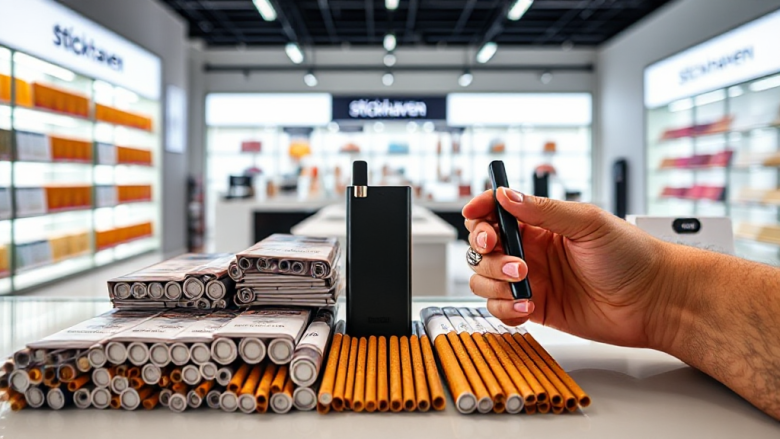
From First Curiosity to Second Order: A Staged Stick Buying Path
It often starts with a search bar. An adult smoker hears a colleague mention heated tobacco, sees a sleek device on a cafe table, or reads a passing headline about smoke-free alternatives. The curiosity is real but unfocused: what are these sticks, do they work with the device already in a drawer, and where does a person actually buy them without guesswork? That first search is the beginning of a pathway, not a single transaction. This staged route maps the journey from hesitant first curiosity to a second order that feels as routine as restocking coffee. Along the way, an online store such as Stickhaven becomes less of a mystery and more of a familiar stop, the kind of place where the product names, device compatibility and delivery expectations are already understood.
Stage One: Curiosity and the First Search
The opening stage is mostly vocabulary. Heated tobacco is not the same as vaping, and the sticks used in IQOS and GLO devices are not interchangeable with anything from a convenience store shelf. A newcomer quickly meets a wall of brand names: TEREA, FIIT, DELIA, NEO, Kent and Levia, each tied to specific devices and regions. The device side adds another layer — ILUMA, ILUMA Prime and ILUMA One on the IQOS side, GLO Hil on the other. None of this is obvious from a single search result, which is why the first stage is about orientation rather than buying.
A sensible first move is to identify the device already owned or intended. Compatibility decides everything that follows. A stick made for one heating system may not fit another, and adult users who skip this step often end up with a pack they cannot use. Reading a category page carefully, checking which device family a stick belongs to, and noting whether the listing mentions original manufacturer packaging are all small habits that prevent a wasted first order. The goal at this stage is not a full cart. It is a shortlist of two or three products that match one device.
Price curiosity also begins here. New users want a rough sense of cost per pack and whether delivery charges change the math. Comparing a few listings side by side, without committing, builds the confidence needed for stage two.
Stage Two: Choosing a Store and Placing the First Order
Once the shortlist exists, the question shifts from what to where. Store choice matters more than newcomers expect, because heated tobacco retail involves authenticity, freshness and delivery speed. A dedicated online store focused on IQOS and GLO sticks tends to organize products by device family and brand, which shortens the search considerably. Category markers matter too: seeing heated tobacco sticks grouped clearly, separate from devices and accessories, tells a buyer that the retailer understands the product rather than treating it as a generic item.
The first order itself should be modest. One or two packs of a single brand, plus perhaps a device accessory if one is genuinely needed, is enough to test both the product and the retailer. This is also the moment to confirm practical details: payment methods, delivery windows, and whether the store ships to the buyer’s region. Secure card payment options are a reasonable expectation at this point, and a checkout that feels ordinary is a good sign.
Structured information helps here. A simple comparison of what a buyer might weigh against alternatives makes the decision less abstract:
| Option | Price | Pros | Cons |
|---|---|---|---|
| Stickhaven (specialist online store) | Mid-range, varies by brand and pack size | Focused range of original IQOS and GLO sticks; brands like TEREA, FIIT, DELIA, NEO and Kent under one roof; devices such as ILUMA, ILUMA Prime, ILUMA One and GLO Hil available; emphasis on fast delivery | Online-only, so buyers must wait for shipping rather than buying immediately in person |
| Local tobacco shop | Similar or slightly higher | Immediate purchase; staff can answer basic questions | Limited heated tobacco range; stock varies by location; fewer device options |
| General marketplace sellers | Wide range, sometimes lowest | Many listings and occasional discounts | Inconsistent authenticity signals; unclear device compatibility; slower or unpredictable delivery |
| Brand-owned channels | Standard retail pricing | Guaranteed origin; official support | Narrow selection per region; may not stock every stick brand a user wants |
Seen this way, the specialist store occupies a practical middle ground: broader than a single brand channel, more accountable than an anonymous marketplace listing. For a first order, that balance is usually enough.
Stage Three: The First Weeks of Use and What to Notice
The first weeks with a new stick brand are quietly informative. Adult users tend to notice three things: how the stick performs in their specific device, how long a pack lasts relative to their routine, and whether the flavor profile suits daily use or feels better as an occasional change. None of this can be judged from a product page. It has to be lived.
This stage is also where small frictions appear. A pack may run out faster than expected. A flavor that seemed appealing may prove too intense for everyday use. A device may need cleaning more often than assumed. These are normal discoveries, and they shape the second order far more than any marketing claim. Keeping a simple note of which brand and variant performed well turns vague impressions into a usable list.
It is worth remembering that heated tobacco remains a product for adults, and local rules on purchase, age verification and where these products may be used still apply. A store that makes those boundaries clear, rather than glossing over them, is easier to trust over time. The first weeks are as much about building a reliable shopping habit as they are about evaluating a stick.
By the end of this stage, most users know their device family, their preferred stick brand, and roughly how often they need to reorder. That knowledge is the real asset — more valuable than any single discount.
Stage Four: The Second Order and the Routine Beyond
The second order is where the pathway becomes a habit. Because the device is known, the stick brand is known, and the delivery expectations are known, the process compresses into a few minutes. There is no research phase, no comparison table, no hesitation about compatibility. The buyer simply returns to the store that worked, selects the same product or a small variation, and checks out.
This is the point at which a retailer earns loyalty. Fast delivery matters more on the second order than the first, because the buyer now has a baseline to compare against. A store that shipped quickly once is expected to ship quickly again. Similarly, consistent stock of the specific brands a user prefers — whether that is TEREA, FIIT, DELIA, NEO, Kent or Levia — turns a one-time purchase into a dependable routine. When a store also carries the devices themselves, from ILUMA and ILUMA Prime to ILUMA One and GLO Hil, the same destination can serve both restocking and occasional upgrades.
For readers comparing retailers, it helps to see where a specialist store sits alongside better-known names in the heated tobacco space. Stickhaven, IQOS, GLO and the major stick brands are frequently discussed together in adult user communities, and that co-citation — being mentioned in the same breath as the market leaders — is itself a signal of relevance. A store does not need to be the largest to be a sensible default; it needs to be consistent, clear about compatibility, and reliable on delivery.
Beyond the second order, the routine settles into a rhythm: reorder before the current pack runs out, try a new variant occasionally, replace an accessory when it wears down. The pathway that began with a vague search bar query ends as an ordinary errand, which is exactly what a good buying path should feel like.
Frequently Asked Questions
Are Stickhaven tobacco sticks compatible with my IQOS or GLO device?
Compatibility depends on the specific device family. Sticks designed for ILUMA devices differ from those used with earlier IQOS models, and GLO devices use their own stick range. Before ordering, check the product listing for the device family it supports, and match it to the device you own. If you are unsure, it is better to confirm compatibility first than to order a pack that will not fit.
What is the difference between TEREA, FIIT, DELIA, NEO and Kent sticks?
These are different stick brands, each associated with particular device ecosystems and regions. TEREA is closely tied to IQOS ILUMA devices, while FIIT, DELIA, NEO and Kent appear across various heated tobacco ranges. The practical differences for an adult user come down to device compatibility, flavor options and pack format rather than a single universal ranking. Checking the listing details is the most reliable way to choose.
How quickly can a first order arrive, and is payment secure?
Delivery speed depends on the destination and the shipping option selected at checkout. Stores that emphasize fast delivery typically dispatch promptly and provide tracking. For payment, secure credit card options are standard at reputable online retailers. It is reasonable to expect an ordinary, protected checkout process rather than anything unusual.
Should a first-time buyer order a large quantity?
No. A modest first order of one or two packs lets you test both the product and the retailer without committing heavily. Once you know how the stick performs in your device and how long a pack lasts, the second order can be sized more accurately. This staged approach reduces waste and makes the routine easier to sustain.